Author: admin

  • EU CBAM Rules in 2026: What Steel Importers Need to Know

    EU CBAM Rules in 2026: What Steel Importers Need to Know

    Industry News & Market Reports · November 19, 2026

    The European Union’s Carbon Border Adjustment Mechanism (CBAM) entered its definitive phase on January 1, 2026. The framework affects imports of selected carbon-intensive goods, including certain iron and steel products, and brings additional carbon-related compliance considerations into international sourcing.

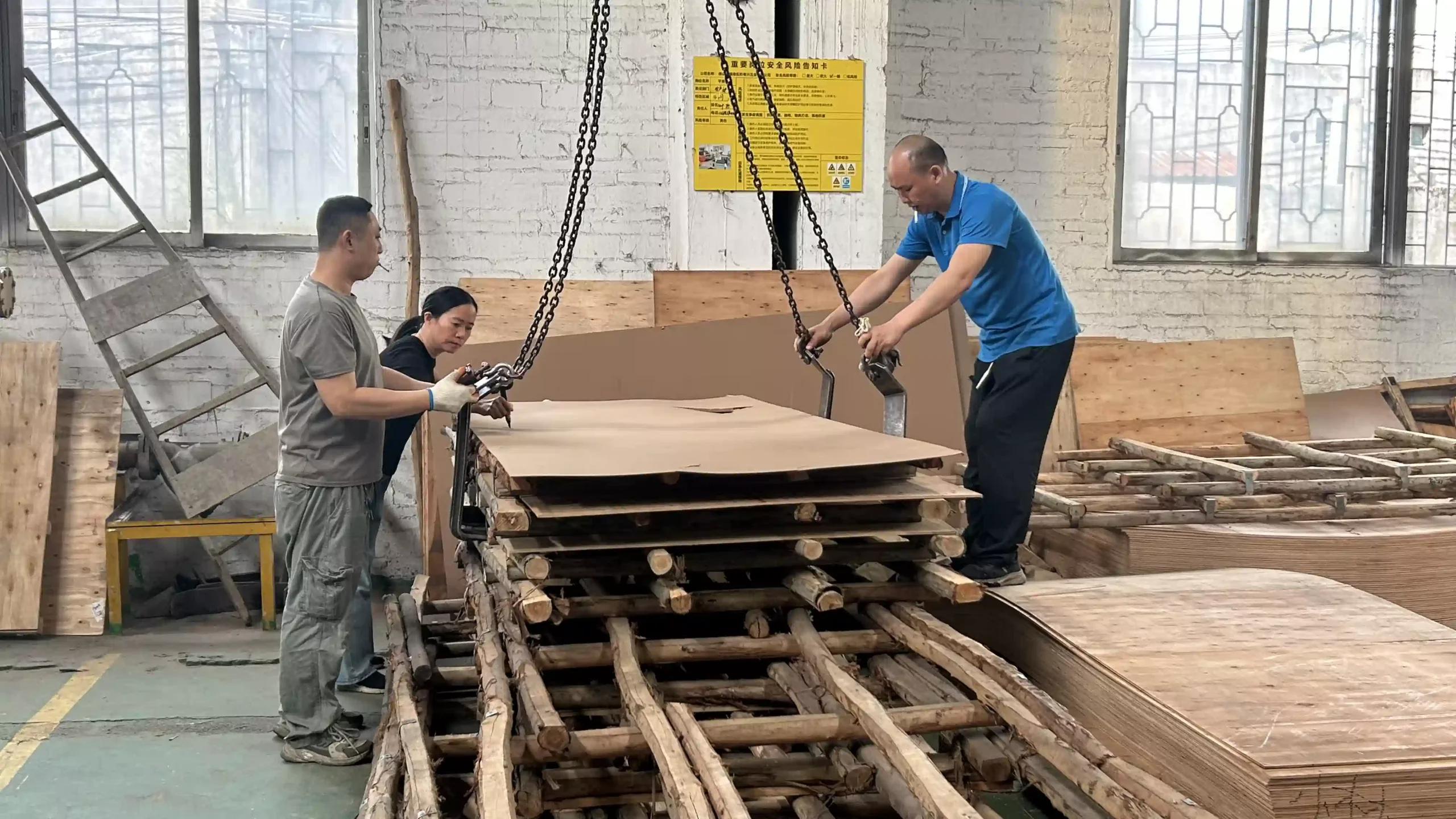
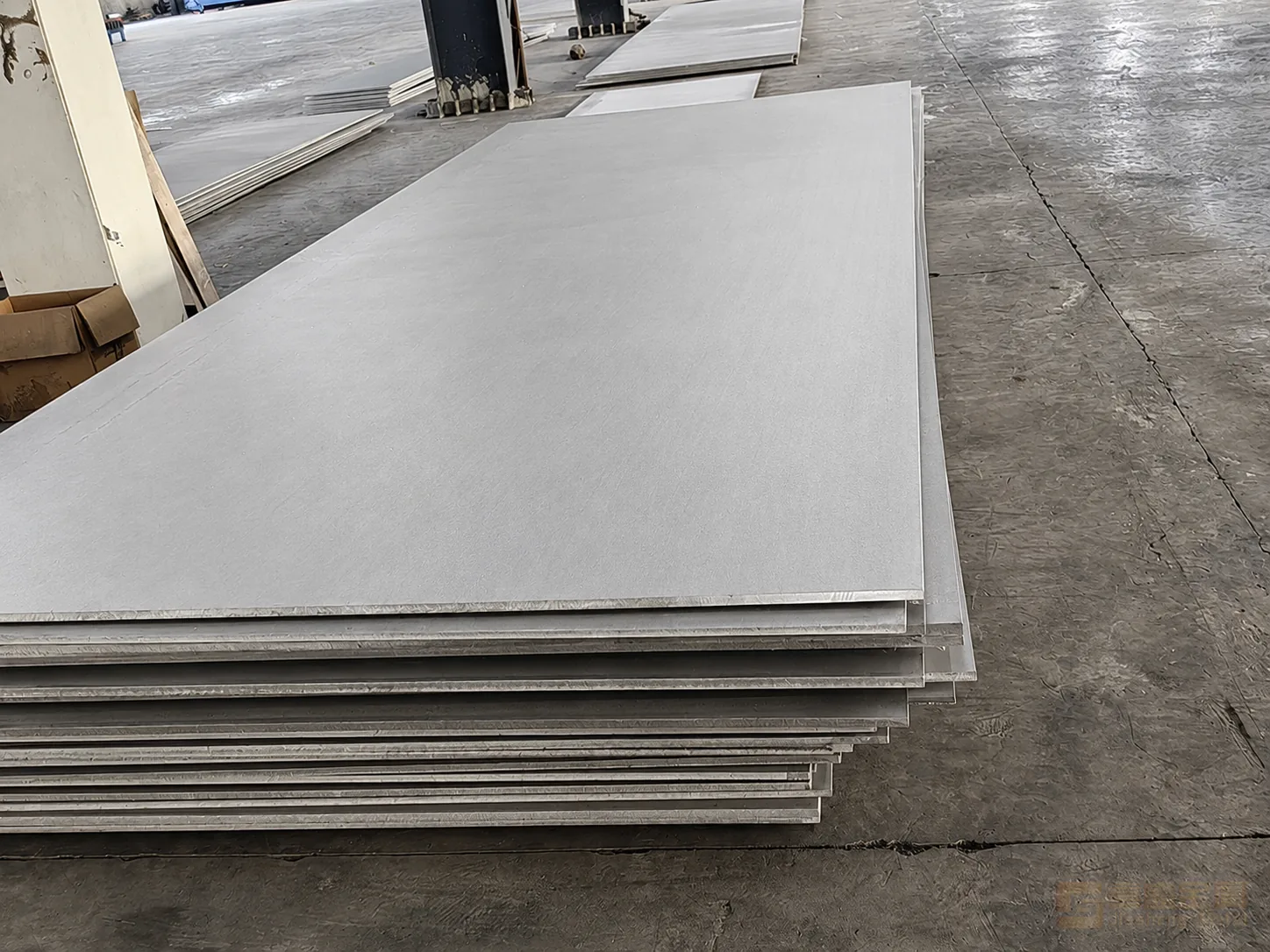
    Metal materials prepared in a warehouse. Photo: FSJS archive; illustrative image, not a European customs facility.

    What CBAM Means for Steel Trade

    CBAM is designed to reduce carbon leakage by relating the carbon cost of certain imported goods to the EU Emissions Trading System. The EU framework covers specified goods in six sectors: iron and steel, aluminium, cement, fertilisers, electricity and hydrogen.

    However, not every stainless steel product is automatically covered. Importers need to check the applicable EU Combined Nomenclature (CN) classification and the current scope of the legislation for the specific goods they purchase.

    2026Definitive regime began
    50 tRelevant single mass-based threshold
    EU CNGoods classification must be checked

    Key Compliance Considerations for Importers

    Under the European Commission’s guidance, EU importers or their indirect customs representatives importing more than the relevant 50-tonne threshold of covered CBAM goods must apply for authorised CBAM declarant status. Authorised declarants have obligations concerning embedded-emissions declarations and CBAM certificates.

    The certificate price is linked to EU ETS allowance auction prices. The European Commission indicates that the 2026 price is calculated on a quarterly-average basis; purchasing and surrender timetables must be checked against the current official requirements.

    A Practical Checklist for International Steel Buyers

    • Confirm the CN code: verify whether the specific imported product is included in the CBAM scope.
    • Check import quantities: determine whether the relevant threshold and authorisation rules apply to the importing entity.
    • Discuss emissions data: ask the producer and trading partners what verifiable production and embedded-emissions information is available.
    • Clarify responsibility: identify who acts as the importer or authorised declarant and which party will supply supporting information.
    • Use the latest official guidance: follow the European Commission and national customs authorities for regulatory updates.
    Important distinction: CBAM is a regulatory compliance framework, not a universal extra tariff on every steel shipment. Actual obligations depend on the goods, import quantities, importing entity and applicable rules.

    How This Changes Supplier Evaluation

    Price and lead time remain central to steel purchasing, but the availability of accurate product and production information is gaining importance. Importers may need to communicate data requirements earlier in the sourcing process and allow time for verification before finalising shipments.

    For suppliers and service centres outside the EU, clear specifications, traceability and realistic documentation commitments can support smoother communication with European buyers.

    FSJS perspective: FSJS Stainless Steel supports material identification, processing specifications and standard export documentation for confirmed orders. Any CBAM-specific emissions reporting or regulatory documentation must be reviewed separately with the importer and relevant production parties.

    Official source: European Commission — CBAM definitive regime. Note: This overview is general industry information and not customs or legal advice.
  • Global Stainless Steel Production Rises 5% in H1 2026

    Global Stainless Steel Production Rises 5% in H1 2026

    Industry News & Market Reports · November 19, 2026

    Global stainless steel melt shop production reached approximately 33.0 million metric tonnes in the first half of 2026, rising 5.0% year on year, according to the world stainless association. The figures show continued growth, with significant differences between producing regions.

    Stainless steel coils in an industrial processing workshop
    Stainless steel coil processing at a workshop. Photo: FSJS archive; illustrative image, not the source of production statistics.
    33.0M tGlobal H1 2026 production
    +5.0%Year-on-year global change
    28.3M tAsia’s H1 2026 production

    Asia Continues to Lead Production

    Asia accounted for approximately 28.3 million tonnes of stainless steel melt shop output in the first six months of 2026, a 6.1% increase compared with H1 2025. Within Asia, China produced approximately 21.1 million tonnes, up 7.1% on the same period a year earlier.

    Output trends elsewhere were mixed. European Union production was approximately 2.9 million tonnes, down 3.7%, while United States output was approximately 1.1 million tonnes. These differences underline how regional stainless steel markets do not necessarily move in the same direction.

    Higher Output Does Not Automatically Mean Lower Prices

    Production data provides useful market context, but it is not a direct forecast for stainless steel prices. Raw-material costs, energy, inventory, demand from manufacturers, shipping conditions and trade measures can affect individual grades and destinations differently.

    In particular, buyers comparing offers for 201, 304, 316 or 430 stainless steel should also check finish, actual thickness tolerance, order volume and required downstream processing. A lower headline price is not always a lower delivered or usable cost.

    What International Buyers Should Monitor

    • Regional availability: compare material availability and delivery periods in relevant supply regions.
    • Material specifications: confirm grade, finish, thickness tolerance and dimensions before comparing quotations.
    • Processing costs: include slitting, cut-to-length, surface protection and packing in the purchasing calculation.
    • Destination costs: consider freight, import procedures and applicable duties alongside ex-factory material prices.
    Market takeaway: The H1 2026 data confirms growing global output led by Asia. It does not, by itself, establish that prices will rise or fall in the following months.

    Looking Ahead

    For international procurement teams, a practical approach combines published market statistics with current supplier quotations and verified specifications. Buyers should review production lead times, trade conditions and inventory requirements rather than relying on a single market indicator.

    FSJS perspective: Based in Foshan, FSJS supplies stainless steel sheets and coils and supports specified slitting, cut-to-length processing and export packing. Our team can help buyers confirm practical specifications when sourcing materials internationally.

  • Inside Our Factory: Loading Stainless Steel Coils for Dispatch

    Inside Our Factory: Loading Stainless Steel Coils for Dispatch

    Factory News & Production Updates

    Inside Our Factory: Loading Stainless Steel Coils for Dispatch

    A real look at the handling work behind a stainless steel coil shipment, from lifting equipment to careful positioning.

    FSJS Stainless Steel  |  Foshan, China  |  Factory Operations

    Before a stainless steel coil leaves the factory, there is an important stage that customers rarely see: moving the coil from the loading area onto the transport vehicle.

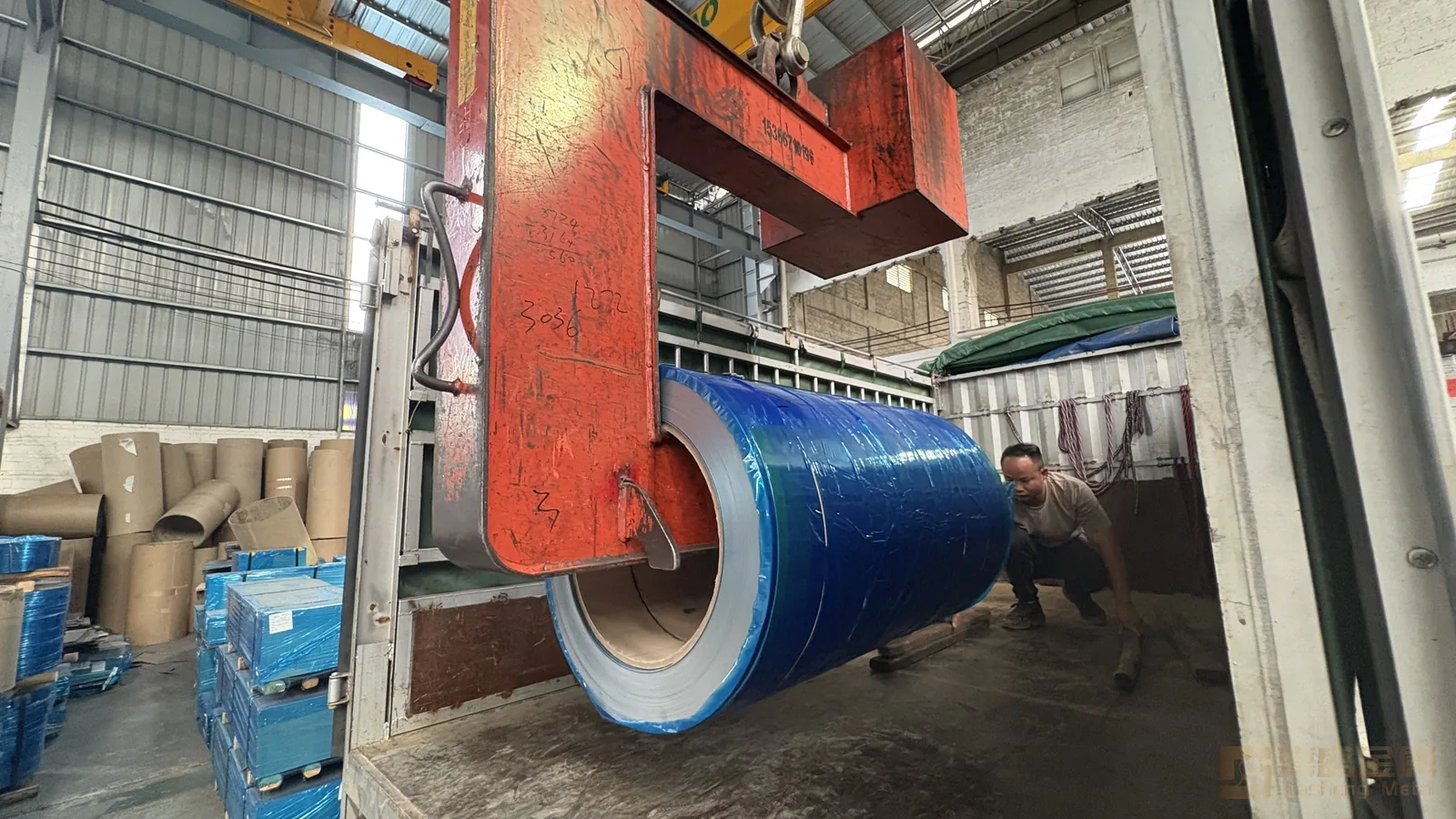
    In this photo from our factory, a large stainless steel coil with blue protective film is being handled using overhead lifting equipment. A team member is nearby as the coil is positioned for loading.

    Factory loading in progress: handling a protected stainless steel coil with overhead lifting equipment at FSJS Stainless Steel.

    Heavy Coils Need More Than Just a Truck

    Stainless steel coils can weigh several tonnes. Moving them calls for suitable lifting equipment, trained personnel and attention to the coil’s dimensions, weight and centre of gravity. The loading method and equipment must be selected for the actual coil and vehicle.

    The photograph captures one part of that process. A protected coil is being moved into position; it does not show the final transport restraint arrangement, which must be checked separately before departure.

    Three Details Buyers Should Discuss Before Dispatch

    01 / COIL DATA

    Weight & Dimensions

    Confirm coil weight, width, outer diameter and inner diameter to plan appropriate handling and loading.

    02 / SURFACE CARE

    Protection During Handling

    Protective film and suitable contact surfaces help reduce unnecessary abrasion, while the handling method should avoid damage to coil edges.

    03 / TRANSPORT PLAN

    Support & Restraint

    Choose suitable coil supports, blocking and restraint arrangements for the vehicle, route and applicable cargo-securing requirements.

    The way a coil is handled and loaded is part of the order experience—not just what happens on the production line.

    From Material Supply to Processing and Dispatch

    At FSJS Stainless Steel, our core business is the supply of stainless steel sheets, plates and coils. We also offer processing services including coil slitting, cut-to-length cutting and leveling for customers who need specific sizes or formats.

    Our goal in sharing factory updates is simple: to give overseas buyers a clearer view of the people, equipment and day-to-day work behind their materials. Real production and loading scenes can tell more than a product catalogue alone.

    What to Confirm When Ordering Stainless Steel Coils

    For a more efficient quotation and shipment plan, buyers can share the steel grade, thickness, width, finish, required quantity, preferred coil weight and delivery destination. Any special film, packing or transport requirements should also be discussed before the order is finalized.

    Planning a Stainless Steel Coil Order?

    Tell us your material specifications and delivery requirements. Our team can review available supply and processing options with you.

    Request a Quote →

  • Inside Our Factory: Handling Stainless Steel Sheets Before Packing

    Inside Our Factory: Handling Stainless Steel Sheets Before Packing

    Factory News & Production Updates

    Inside Our Factory: Handling Stainless Steel Sheets Before Packing

    FSJS Stainless Steel   |   Foshan, China   |   Factory Operations

    Good sheet handling starts long before a package is ready for shipment. Here is a real look at how our team works with stacked metal sheets on the factory floor.

    In this photo, our workers are coordinating around a lifting device as a sheet stack is handled above wooden supports. It is an ordinary production-floor moment, but it shows an important part of material preparation: moving large sheets requires attention to support, positioning and communication.

    FSJS Stainless Steel factory workers handling a stack of metal sheets with lifting equipment and wooden supports
    A real moment from the FSJS factory floor: workers coordinating sheet handling with lifting equipment.

    Why Sheet Handling Deserves Attention

    For stainless steel sheets, the visible finish is only one part of the purchasing requirement. Handling conditions can also affect the material before it reaches the next processing or packing stage. Contact between sheet surfaces, uneven support and inappropriate movement may introduce scratches, edge damage or deformation.

    That is why buyers should discuss not only grade, thickness and finish, but also how materials will be handled, protected and packed for their application.

    For large sheet orders, a practical handling plan is part of preparing the material—not an afterthought.

    Three Practical Details to Confirm

    01 / SUPPORT

    Stacking & Spacers

    Use suitable supports and separation methods for the sheet dimensions, surface finish and package weight.

    02 / MOVEMENT

    Controlled Handling

    Coordinate lifting and movement with equipment and methods appropriate for the load.

    03 / PROTECTION

    Surface & Edges

    Specify protective film, interleaving or edge protection where the end use requires it.

    From Material Supply to Processing

    At FSJS Stainless Steel, our core business includes stainless steel sheets, plates, coils and strips. We also provide processing options such as coil slitting, cut-to-length cutting and leveling, depending on the order requirements.

    When discussing a sheet order, useful details include steel grade, actual thickness requirements, width and length, surface finish, quantity and packaging expectations. Clear specifications help both sides plan processing and delivery more effectively.

    Sharing the Work Behind the Product

    Customers usually see the final sheets and documents. We also want them to see the everyday work behind an order—the preparation, handling and teamwork that happen on our factory floor.

    This is one of those moments. No staged showroom, just a genuine look at material handling in progress.

    Planning a Stainless Steel Sheet Order?

    Send us your grade, thickness, sheet size, surface finish, quantity and destination. We can discuss material availability, processing options and suitable packing arrangements for your order.

    Request a Quote →

  • Behind the Scenes: Preparing Stainless Steel Sheets for Shipment

    Behind the Scenes: Preparing Stainless Steel Sheets for Shipment

    FACTORY NEWS & PRODUCTION UPDATES

    Behind the Scenes: Preparing Stainless Steel Sheets for Shipment

    FSJS Stainless Steel   |   Foshan, China   |   Factory Operations

    Before stainless steel sheets leave our factory, there’s work that customers don’t always get to see: preparing and securing the packages for handling and transportation.

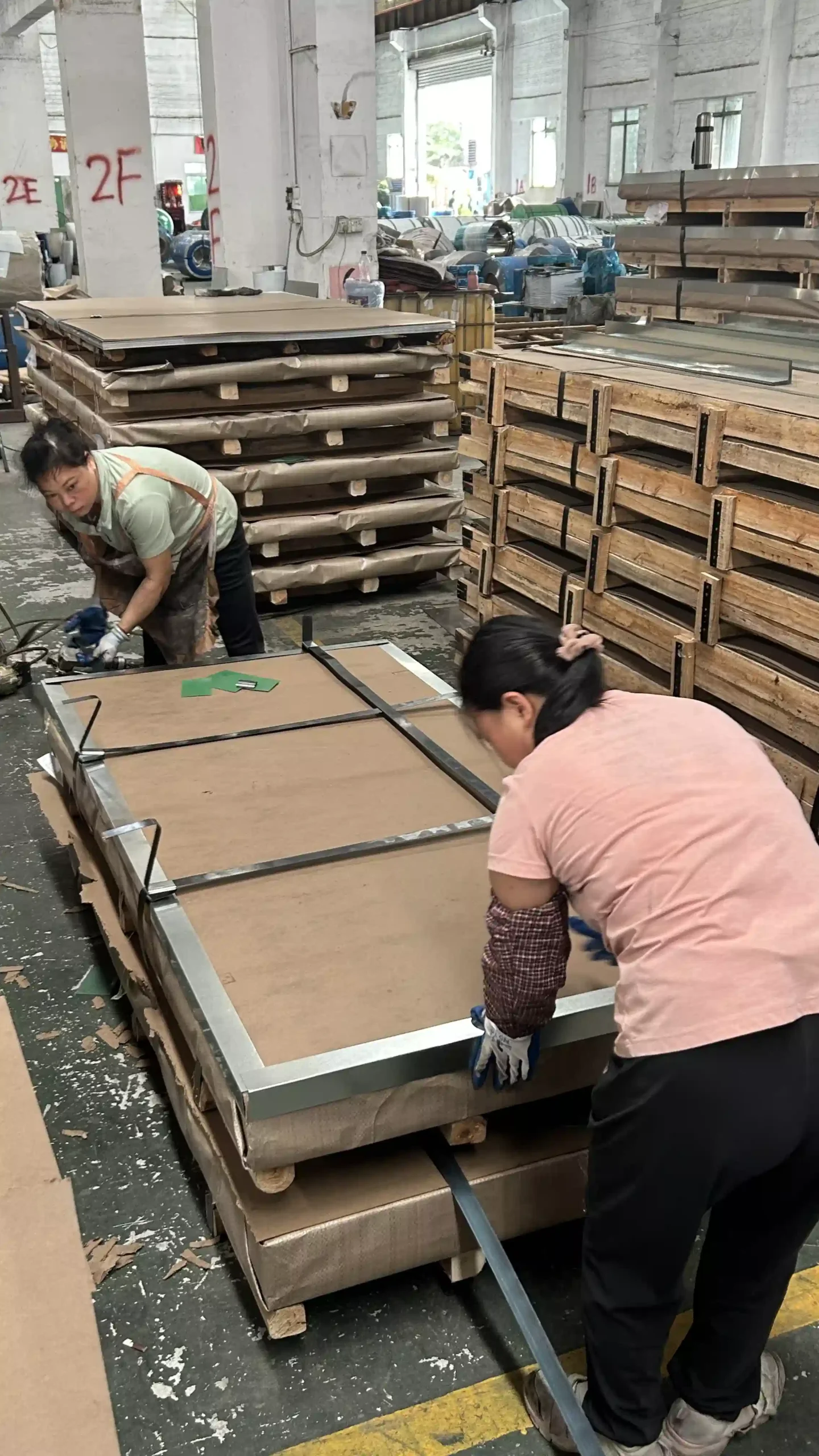
    This photo captures a moment from our packing area. Our team is working around a stack of sheet packages, positioning and fastening the protective packing structure. It is hands-on work, and the small details deserve attention.

    FSJS factory team preparing protective packing for stainless steel sheet packages
    At our Foshan factory: team members working on protective packaging for stainless steel sheet packages.

    Why Packaging Is Part of the Order

    For international buyers, the condition of the material at arrival matters just as much as the agreed grade, thickness and finish. Stainless steel sheets can be affected by scratches, edge damage, moisture and movement if packing and handling are not planned carefully.

    Packaging needs to suit the product, shipment method and customer’s requirements. A mirror-finished sheet, for example, may require different surface protection from a standard industrial 2B sheet.

    Good packing starts with understanding the material — not simply adding more straps or wrapping.

    What We Pay Attention to Before Dispatch

    01 /

    Surface & Edge Protection

    Consider the sheet finish and the protection needed against handling marks and edge damage.

    02 /

    Support & Securing

    Prepare suitable supports and restraints to help keep packages stable during handling and transit.

    03 /

    Shipment Requirements

    Confirm package dimensions, handling needs and any destination-specific packing requirements.

    Real Factory Work, Not Just Finished Products

    At FSJS Stainless Steel, our core supply includes stainless steel sheets, plates and coils. We also provide processing services such as coil slitting, cut-to-length cutting and leveling.

    We share scenes like this because overseas buyers should be able to see more than a product catalog. They should understand the practical work involved between order preparation and dispatch.

    Every shipment has its own specifications and packing needs. Our goal is to discuss those requirements clearly and prepare the material accordingly.

    Planning a Stainless Steel Order?

    Tell us the grade, thickness, dimensions, finish, quantity and destination. We can discuss suitable processing and packing options for your shipment.

    Discuss Your Requirements →

  • 2B, BA, No.4, Hairline or Mirror: Which Stainless Steel Finish Should You Specify?

    2B, BA, No.4, Hairline or Mirror: Which Stainless Steel Finish Should You Specify?

    Technical Guides / Buying Advice

    2B, BA, No.4, Hairline or Mirror: Which Stainless Steel Finish Should You Specify?

    The right finish affects appearance, fabrication workflow and how buyers should inspect the delivered material.

    Five finishes buyers commonly ask about

    2B: A smooth cold-rolled mill finish, often used as a practical base for fabrication or further finishing.
    BA: Bright-annealed, typically brighter and more reflective than 2B, but not identical to a mechanically polished mirror.
    No.4: A directional satin polish; appearance depends on abrasive process and agreed reference.
    Hairline (HL): A long, continuous directional brushed effect used in visible panels and trim.
    Mirror / 8K: A highly reflective polished finish, where handling and scratch protection become particularly important.

    Why a finish name is not enough

    “No.4” and “hairline” may look different from one supplier or batch to another. Before purchasing visible material, agree on a physical sample or approved photos, grain direction, acceptable scratches, reflectivity expectations and whether one or both sides need finishing.

    Protective film is part of the discussion

    The film selection should match the finish, storage period, processing and removal conditions. Highly reflective material may require additional care. Adhesive film can age with heat, sunlight and storage time, so agree on film type and practical removal timing.

    How FSJS supports finishing orders

    We handle standard stainless steel sheets and coils and offer several surface-processing options, including brushing and polishing. Decorative and colored finishes are additional options when the project calls for them; material grade and dimensions remain the starting point.

    Buyer takeaway

    When appearance matters, specify the finish, approved reference, grain direction and film expectations in the order—not only the finish abbreviation.

    Need help specifying stainless steel?

    Send us your grade, thickness, dimensions, surface finish, quantity, application and delivery destination. Our team can review the available material and processing options before quotation.

    Request a Quote →

  • Beyond Emails: Our Business Visit to Bangladesh

    Beyond Emails: Our Business Visit to Bangladesh

    Customer Visits & Travel / Bangladesh

    Beyond Emails: Our Business Visit to Bangladesh

    Meeting people in person, listening to local market needs, and building connections that go beyond a quotation.

    Good business relationships often begin with a conversation. But sometimes, the best way to understand a market is to go there, meet people face to face, and see how business is done locally.

    Our FSJS Stainless Steel team recently traveled to Bangladesh for a business visit. The trip gave us an opportunity to connect with people on the ground, experience the local business environment, and better understand the perspectives of customers in the market.

    Arriving in Bangladesh: Understanding the Market Beyond a Screen

    Emails and online meetings are useful, but they cannot tell the whole story. Being in Bangladesh allowed our team to experience the local environment directly, from the pace of the city to the everyday business conversations that make each market different.

    FSJS Stainless Steel team during a business trip to Bangladesh
    Our team during the Bangladesh business trip — taking time to understand the market beyond online communication.

    Face-to-Face Connections Matter

    For international stainless steel sourcing, a useful discussion goes well beyond the price per ton. Buyers may need to consider material grades, actual thickness, coil dimensions, processing options, delivery arrangements, and supporting documents.

    In-person visits create space for clearer communication and help both sides understand what matters before an order is placed. For us, listening carefully is just as important as presenting what we can supply.

    Material RequirementsDiscussing the intended application, grade, thickness and surface finish.
    Processing OptionsReviewing coil slitting, cut-to-length and leveling requirements where relevant.
    Order CoordinationClarifying packaging, inspection documents and delivery expectations.

    A farewell moment during the FSJS Stainless Steel business visit to Bangladesh
    A farewell moment from the trip — a reminder that business is also about people and communication.

    Learning Through Local Visits

    During the trip, we also had the opportunity to visit a local business location and spend time with people in the community. These moments helped us learn more about the working environment and the relationships behind local trade.

    Not every meaningful part of a business trip happens in a meeting room. Seeing local businesses and speaking with people directly can help suppliers ask better questions and respond more thoughtfully to future inquiries.

    FSJS Stainless Steel team and local contacts at a business location in Bangladesh
    Meeting local contacts during our Bangladesh trip.
    Trust is built through clear communication, practical understanding, and consistent follow-through — not just a competitive quotation.

    What This Means for Our Customers

    FSJS Stainless Steel supplies stainless steel sheets, coils and strips, supported by services including precision slitting, cut-to-length and leveling. When customers share their requirements, our aim is to understand the application and confirm the relevant specifications before moving forward.

    Our Bangladesh visit was another step in learning how to communicate more effectively with overseas customers. We appreciate the people who made time to meet and welcome future opportunities to stay in touch.

    Planning to Source Stainless Steel from China?

    Tell us the material grade, thickness, width, finish, quantity and destination you need. Our team can review your specifications and discuss available supply and processing options.

    Share Your Requirements →

  • Beyond Email: Meeting Customers Face to Face at FSJS Stainless Steel

    Beyond Email: Meeting Customers Face to Face at FSJS Stainless Steel


    Customer Visits / FSJS Stainless Steel

    Beyond Email: Meeting Customers Face to Face at FSJS Stainless Steel

    Good Cooperation Starts With Clear Conversations

    Messages and quotations are important, but sitting down together can make it easier to understand what a customer actually needs.

    FSJS Stainless Steel team and visitors taking a group photo during an in-person meeting
    A moment from a face-to-face meeting with visitors at FSJS Stainless Steel.

    Putting People Behind the Business

    We recently welcomed visitors for an in-person meeting at FSJS Stainless Steel. We also took a group photo to remember the occasion.

    For overseas purchasing, many discussions start through messages and email. Meeting in person gives both sides another chance to ask questions, explain expectations and get to know the people behind the communication.

    Clear Requirements Make Better Orders

    For stainless steel sheets and coils, small details can have a big effect on the final use. We encourage buyers to confirm material grade, dimensions, thickness tolerances, surface finish, required processing and shipping expectations before production or dispatch.

    These topics are easier to resolve when both sides share the same understanding of the specifications. A productive meeting is not about making big promises; it is about reducing uncertainty.

    Strong supplier relationships are built through clear information, reliable follow-up and attention to the details of each order.

    Keeping Communication Practical

    Our core products are stainless steel sheets, coils and strips. In addition to material supply, we provide coil slitting, cut-to-length and leveling services. We use customer conversations to understand which materials and processing requirements are actually relevant to each project.

    We appreciate the opportunity to meet visitors at our facility. Whether the conversation leads to an immediate order or a future inquiry, sharing accurate information and maintaining open communication are valuable parts of working together.

    You’re Welcome to Visit

    If you are planning to visit Foshan to source stainless steel materials, we would be glad to discuss your requirements and arrange a visit subject to confirmation.

    Let’s Talk About Your Requirements

    Have a stainless steel sourcing plan or an upcoming trip to Foshan? Tell us what materials you need and what you would like to discuss.

    Request a Quote →

  • A Closer Look at Our Stainless Steel Coils: Customer Factory Visit

    A Closer Look at Our Stainless Steel Coils: Customer Factory Visit


    Customer Visits / FSJS Stainless Steel

    A Closer Look at Our Stainless Steel Coils: Customer Factory Visit

    An Inside Look at Our Stainless Steel Coil Inventory

    A factory visit gives buyers something a product catalog cannot: a direct look at the materials, working environment and people behind a supply quotation.

    Visitor walking through a warehouse aisle with stainless steel coils at FSJS Stainless Steel
    A visitor viewing stainless steel coils in our warehouse in Foshan, China.

    Seeing the Materials Firsthand

    During this visit, we walked through the stainless steel coil storage area together. The coils in the warehouse provided a practical starting point for discussing material supply and the details that matter to buyers.

    When sourcing stainless steel coils, the grade alone is not enough. Thickness, width, surface finish, edge condition and coil weight all affect whether the material is suitable for the next manufacturing step.

    What Buyers Can Check During a Factory Visit

    A site visit is a good opportunity to ask about available material grades, actual thickness tolerance, surface protection and how coils will be prepared for dispatch. For buyers who need further processing, it is also useful to discuss slitting widths, cut-to-length requirements and packaging before confirming an order.

    The most useful factory visit is one that turns a product requirement into clear, confirmable specifications.

    More Than a Price Discussion

    At FSJS Stainless Steel, standard stainless steel sheets and coils are central to our supply business. We also offer processing services such as coil slitting, leveling and cut-to-length to support different downstream applications.

    We welcome conversations about the details behind each inquiry, whether a buyer is comparing material options, preparing a trial order or planning repeat purchases. Seeing the workplace in person helps make those conversations more specific.

    Our Approach to Customer Visits

    We believe a useful visit should be straightforward: show real materials, discuss real requirements and answer questions clearly. That is the approach we aim to bring to every meeting at our facility.

    Let’s Talk About Your Requirements

    Planning to source stainless steel coils or sheets? Send us the grade, thickness, width, surface finish and estimated quantity. We can review the options with you.

    Request a Quote →

  • Material-Selection

    Material-Selection

    Technical Guides / Buying Advice

    How to Choose the Right Stainless Steel Grade: 201, 304, 316 or 430?

    Stainless steel grades should be selected around the end-use environment, not only the lowest price.

    Start with the application, not the grade number

    Two buyers may both request stainless steel sheet but need very different performance. Before comparing quotations, clarify whether the material will be used indoors, near the coast, in a food-contact environment, or as a formed component. Exposure, cleaning chemicals, expected service life and local requirements all affect selection.

    What the common grades mean

    201: Often considered for cost-sensitive indoor products where the service environment and fabrication process are suitable. Its corrosion performance is generally less robust than 304 in demanding conditions.
    304: A widely used general-purpose austenitic grade for equipment, kitchen-related fabrication and architectural products under suitable conditions.
    316 / 316L: Contains molybdenum, which improves resistance to some chloride-related corrosion situations compared with 304; it is not corrosion-proof.
    430: A ferritic, generally magnetic grade frequently selected for suitable indoor trim and appliance uses; it has different forming, welding and corrosion characteristics from 304.

    Do not overlook fabrication

    Deep drawing, bending, welding and polishing can change what grade or condition is practical. For example, a designation such as “201” alone does not describe all deep-drawing performance. Ask about forming severity, temper/condition and the intended tooling before confirming a substitute.

    What to send us for a useful quotation

    Share the application, grade or acceptable alternatives, thickness, width/length, surface finish, quantity, destination and any mandatory standard. If the environment includes salt spray, chemicals or sustained moisture, mention it early so the material selection can be reviewed.

    Buyer takeaway

    A lower unit price is only worthwhile if the material performs adequately in the final application. When requirements are uncertain, sample testing and customer-side design approval are sensible steps.

    Need help specifying stainless steel?

    Send us your grade, thickness, dimensions, surface finish, quantity, application and delivery destination. Our team can review the available material and processing options before quotation.

    Request a Quote →